• Home
  • Conference Overview
  • Committee
    • High Committee
    • Scientific Committee
    • Media Committee
    • Financial Committee:
  • Research
  • Conference Proceedings
  • Home
  • Conference Overview
  • Committee
    • High Committee
    • Scientific Committee
    • Media Committee
    • Financial Committee:
  • Research
  • Conference Proceedings
No Result
View All Result
  • Home
  • Conference Overview
  • Committee
    • High Committee
    • Scientific Committee
    • Media Committee
    • Financial Committee:
  • Research
  • Conference Proceedings
No Result
View All Result
No Result
View All Result

From Poisoned Skies to Present Struggles: The Long Shadow of Chemical Genocide in Halabja

Abstract

Background and objectives: The chemical bombardment of Halabja in 1988 cast a trans-generational shadow that spans death. The present study compares historical victim testimonies with biomedical and environmental research to highlight interconnected health, environmental, social and political impacts and find practical lapses in treatment, restoration and awareness.

Methods: Using Van Manen’s hermeneutic phenomenology, we conducted purposive, semi-structured interviews with 12 survivors of 1988 Halabja chemical genocide and the victims’ relatives from June to August 2025. Interviews (60–80 minutes) were recorded, transcribed, translated, and thematically analyzed via Van Manen’s six activities.

Results: Data analysis led to the emergence of five themes: (1) lasting humanitarian and health consequences; (2) displacement and social fragmentation; (3) environmental damage and contamination; (4) psychosocial trauma and community recovery; and (5) political and global dimensions of chemical genocide.

Conclusion: Recovery remains non-linear and incomplete. Comprehensive solutions to a protracted response include sustainable clinical care, open environmental surveillance, psychosocially consistent care, and commemoration and redress in consonance with international agreements.

Keywords: Halabja; chemical genocide; sulfur mustard; hermeneutic phenomenology; environmental contamination; psychosocial trauma.

Full Text Research

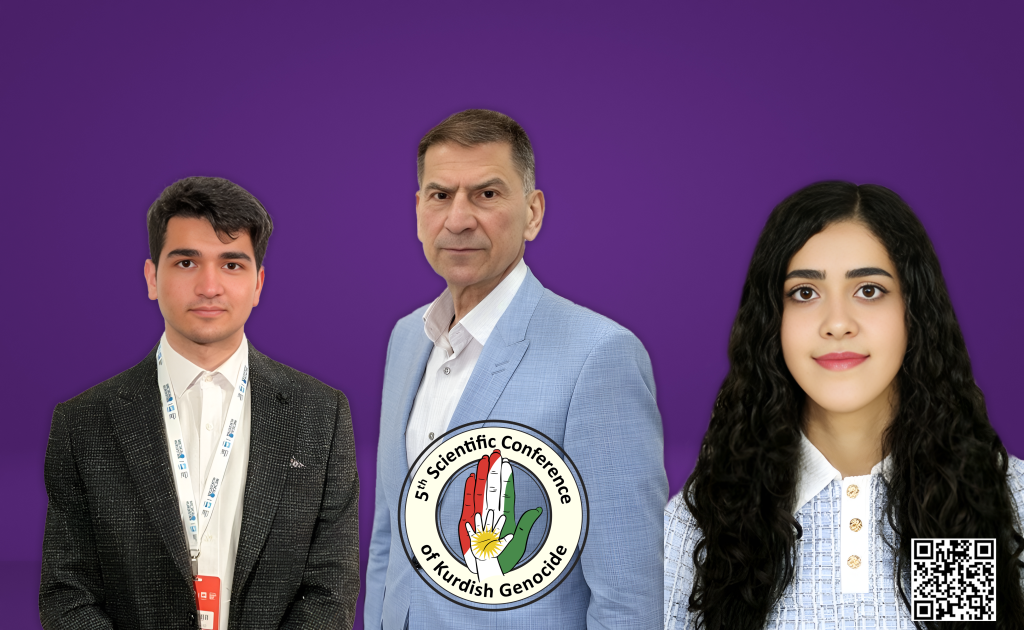
Arya Hemn Mahmood

A dedicated medical student with a strong interest in healthcare, scientific research, and improving patient outcomes through evidence-based practice.

Ranu Nazar Abdulqadir

I am Ranu, a fourth-year medical student with a strong passion for learning and professional growth. Beyond my academic pursuits, I enjoy painting, playing the piano, and reading novels, which enhance my creativity and balance my scientific focus with an appreciation for art and literature.

5th International Scientific Conference of Ministry Of Higher Education& Scientific Research And Ministry of Health. (Scientific Documentation of Anfal Crimes and Mass Graves, Towards International Recognition Genocide of the Kurdish People).​

Follow Us

  • Home
  • Conference Overview
  • Committee
    • High Committee
    • Scientific Committee
    • Media Committee
    • Financial Committee:
  • Research
  • Conference Proceedings

Recent News

From Mass Graves to Memorial Graves: The Role of DNA in Srebrenica

From Mass Graves to Memorial Graves: The Role of DNA in Srebrenica

Role and Management of Forensic Anthropology and Forensic Medicine in Estimating Sex and Age of the Yazidi Kurdish Mass Grave in Kojo, Near the Sinjar Area

Role and Management of Forensic Anthropology and Forensic Medicine in Estimating Sex and Age of the Yazidi Kurdish Mass Grave in Kojo, Near the Sinjar Area

  • Conference Overview
  • Financial Committee:
  • High Committee
  • Home 6
  • Media Committee
  • Resecher
  • Scientific Committee
  • Scientific Committee

© 2026 JNews - Premium WordPress news & magazine theme by Jegtheme.

No Result
View All Result

© 2026 JNews - Premium WordPress news & magazine theme by Jegtheme.